Garmin Descent G2 for Freediving — Honest Review
Garmin Descent G2 for Freediving — An Honest Review
I get asked about the Garmin Descent G2 almost every week, usually by freedivers who like the idea of a Garmin dive watch but aren't sure they need to spend flagship money. So let me be straight with you, the way I'd talk to you across the counter rather than in a sales pitch. The G2 is the most affordable Garmin dive computer we currently stock, and for a lot of freedivers it is genuinely enough watch. Whether it's the right one for you depends on what you're actually doing in the water.
This review only covers what the watches in front of me actually do — the specs on our own listings. If something isn't confirmed, I've left it out rather than guess.

What the Descent G2 actually gives you
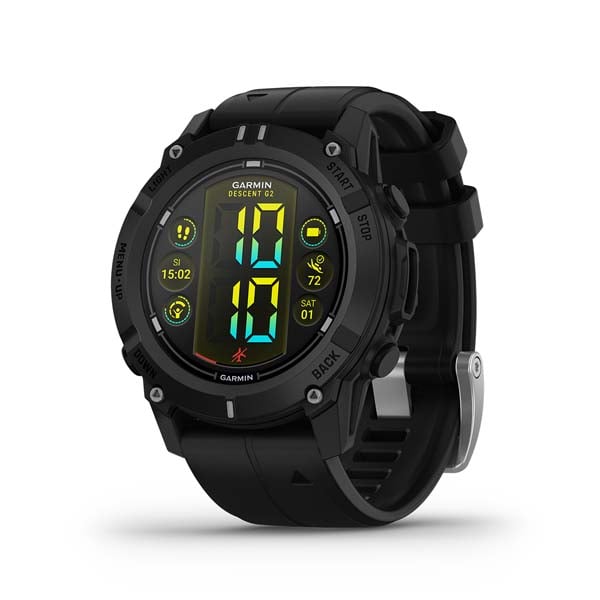
The Descent G2 is a dive computer in a smartwatch body, with a touchscreen-and-button interface and a 1.2-inch AMOLED display that the listing describes as readable at any depth. It carries a sapphire lens, leakproof buttons and a 10 ATM dive rating.
For freediving specifically, here's what matters:
- Dive modes covering recreational, advanced, technical, freediving and pool apnea
- A built-in 3-axis dive compass
- Surface multi-GNSS to mark your entry and exit points
- On-device dive logs you can review afterwards in the Garmin Dive app
- Customisable dive-mode screens
- Tide data, when paired with a compatible smartphone
Where the G2 quietly pulls ahead of the flagships on paper is everyday life out of the water. It carries 24/7 health and wellness monitoring — heart rate, advanced sleep monitoring and Pulse Ox among them — plus built-in sports apps for cycling, open-water swimming, strength training and more. If you want one watch that trains with you and dives with you, that's a real point in the G2's favour.
It comes in two colours, Black and Paloma, and is the most accessible entry point into Garmin's dive line we carry, with a 2-year local warranty included.

Who the G2 is honestly for
If you're a freediver or apnea pool trainer who wants reliable depth and time, a compass, surface positioning and a proper log you can review later — and you'd also like the daily health tracking and sports apps — the G2 does that without asking you to stretch to flagship pricing. That's the honest case for it.
Where the Mk3 and Mk3i go further
Now the other side of the conversation. Our current flagship line is the Descent Mk3 43mm, the Descent Mk3i 43mm and the larger Descent Mk3i 51mm. These are more capable dive instruments, and the price reflects it.
The things the Mk3 family offers that the G2 listing doesn't mention:
- A 200-metre dive-rated case with sapphire lens and leakproof metal inductive buttons
- A wider dive-mode set — single and multiple gas dives (nitrox and trimix), gauge, apnea, apnea hunt and closed-circuit rebreather
- A variometer that gives freedive descent and ascent rate feedback through tone and vibration — a genuinely useful cue on the line
- DiveView colour maps with bathymetric contours and 4,000+ dive sites
- The Dive Readiness tool (sleep, exercise, stress, jet lag)
- Lume Mode low-light readability and built-in ABC sensors with an underwater compass
- Reference Point GPS navigation on top of surface GPS
The Mk3 43mm is the step up into the flagship line in Stainless Steel, with up to 30 hours of dive-mode battery and up to 10 days in smartwatch mode.

The Mk3i air-integrated models
If you also dive on tanks, the Mk3i 43mm adds air integration via Descent T2 transceivers (sold separately) for pressure monitoring on up to 8 tanks through the SubWave sonar data network. SubWave also brings diver-to-diver preset messaging up to 30 metres and tank-pressure and depth monitoring for up to 8 divers within 10 metres. The Mk3i 43mm carries a premium over the non-integrated Mk3 for that air integration, and comes in Bronze or Carbon Gray.
The Mk3i 51mm is the largest of the line, with a 1.4-inch AMOLED display (versus 1.2-inch on the 43mm models), the same air integration and SubWave features, up to 30 hours of dive-mode battery and up to 10 days in smartwatch mode, and a built-in LED flashlight with variable intensities and strobe modes. It's the flagship at the top of the range, in Carbon Gray. All three flagships include the same 2-year local warranty as the G2.
So which one should you buy?
Here's how I'd sort it if you were standing in the shop:
- Buy the Descent G2 if you're primarily a freediver or pool apnea trainer, you want strong everyday health and sports tracking, and you'd rather not pay flagship prices for tank-diving features you won't use.
- Step up to the Mk3 43mm if you want the variometer's freedive ascent/descent feedback, DiveView maps, Dive Readiness, the 200-metre case and the broader gas/rebreather dive modes — without air integration.
- Choose the Mk3i 43mm or Mk3i 51mm if you scuba dive on tanks too and want air integration and SubWave. Pick the 51mm if you also want the larger 1.4-inch display and the built-in LED flashlight.
My honest summary: the G2 is not a compromised watch, it's a differently-aimed one. For pure freediving and daily wear it covers the essentials at the friendliest price in the current Garmin line we carry. The Mk3 and Mk3i earn their premium with the variometer, mapping, the deeper case rating and — on the Mk3i — air integration. None of that makes the G2 a lesser choice; it makes it the sensible one for a lot of freedivers.
If you're still weighing it up, come and talk to us — I'd far rather you bought the watch that fits your diving than the most expensive one on the shelf.